Describe how your personality is suited to your sport and why you possess set traits or characteristics. How has your personality formed?

See the source image

Personality Is a huge aspect of any type of sport that is played it consists of many things that improves all areas of a game. In my case there are many theories and traits that link into my sport and the way I play it.

Personality is the sum total of an individuals characteristics which makes the unique. Lazaros and Mowart, 1979belived that personality is underlying and relatively stable psychological structures and processes that organise by human experiences and the action and reaction change to the environment.

One of the three theories is ‘the trait approach’ which was founded by Eysenck Cattel, he believes that your personality is genetically ingrained and inherited from there family. it is relatively stable and enduring and can be used to predict the way in which we reacted to a certain situation. its also frequently evident in your behaviour. Eysenck believed that there are 2 types of personalities.

Type A: impatient, intolerant, high levels of stress.

Type b: relaxed, tolerant, low stress level

This theory is very straight forward and not flexible which restricts any movement in-between and isn’t very specific to anyone’s personality because there personality may not lay in any of these types. I also find it had to be either or the types  as I feel as though I can be all of those characteristics.

The next theory is the ‘situation approach’  where Bandura’s social cognitive theory 1977. Personality is built up out of our experiences of the social world. this happens in my life where most of my family is sporty and always like to win so I feel the same drive as them when I want to win a certain match and feel as though I have let myself down if I didn’t win the match.

See the source image

there are 4 stages to observational learning;

attention, wanting to have a behaviour

retention, remembering the behaviour

motor reproduction, practicing the behaviour

motivation, liking the reinforcement making you want to continue the behaviour.

this is still an unreliable predictor. 

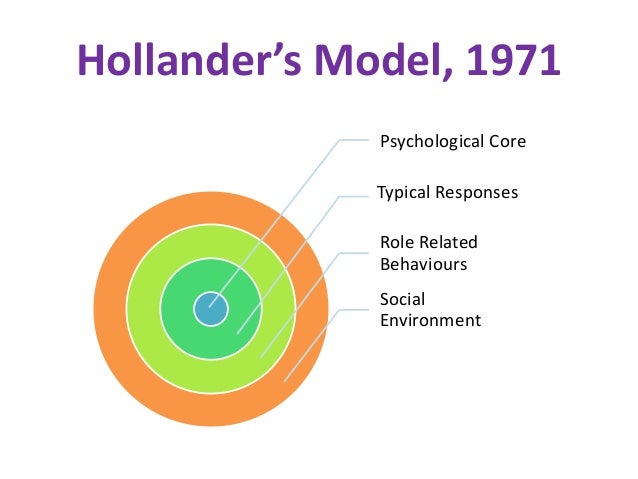
 the last approach is called the interactional approach, Hollanders theory states that behaviour is a combination of both inherited (built in) personality traits and environmental factors.
See the source image

because this structure is much wider and allows room for characteristics to come into play. I agree slightly more with this as I agree with how you react to a situation is in your core (flight or fight) however in a sporting environment I completely change and become very aggressive and loud, where as in real life I am quite chilled. Therefor it makes it a lot more reliable because it is open to a much wider range of characterizes or an individuals attitude. 


discuss the statement that the most skilful sportsmen/women are form ‘games’ environment where transfer of learning can naturally take place.

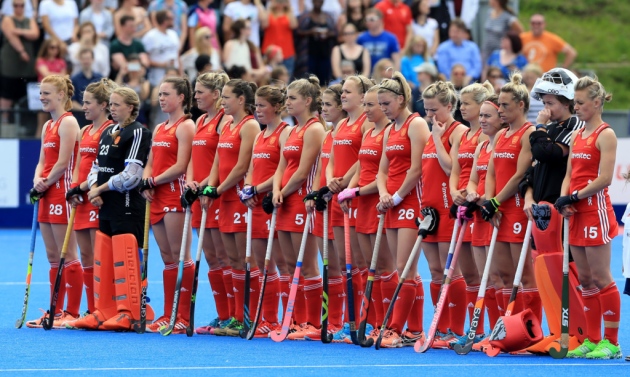
Image result for field hockey

In this blog post i will be exploring the idea of weather the most skilful performer is in a games environment or where a transfer can naturally take place which is usually a less stressful situations which allows the athlete to take their time in the skill that they are going to complete. The types of sports that involve a lot more calmer type of training things such as golf which the sport is self paced which is where the athlete decides when to begin the game situation this also happens in tennis when the performer is going to do a serve the make sure they are ready to do the best serve that they can by bouncing the ball a few times to get there eye in.

 what is a skill?

skill
noun
1.
the ability to do something well; expertise.
“difficult work, taking great skill”
many things can effect a skill in a game situation for example an ‘open skill’ which means the environment can continually change due to the opposition this type of skill can not be easily replicated in training and there for it is harder to transfer the skills from training to the game. however i do agree that a positive transfer is more natural in a game situation because it will really completes and secures the skills this is because when performing the skill under pressure it is a lot more harder then it is in training. and therefore people in the ‘games environment’ they are more likely to be skilful because they can actually do the skill in a stressful environment.


there are all different types if transfer for example:

  • transfer, the influence that one skill has on another. this is on the influence on both learning and performance of another.
  • positive transfer, patterns of the movement that relate positively across to different activities. 
  • bilateral transfer,moving one skill from the right side and transfer it to the left.
  • proactive transfer,previously learned skills will influence new skills
  • retroactive transfer, newly learnt skill will influence skills already learnt.

Image result for alex danson

For example Alex Danson is able to transfer bilaterally which is one of her key skills by using her reverse side this makes her a lot more intimidation to the defenders because most players left side is weak however  she does not have a weak side and therefore is a lot harder to defend because you can not roll her out of her strong side.

the characteristics of a skilled performer is someone who is efficient in the way that they play. they have to have a good technique and be very controlled aesthetic to watch consistent and always predetermines where they are going to pass the ball before they get the ball.   

athletes in a non competitive environment have to do the same amount of training and therefor can have the same amount of skill as someone who then transfers that skill into a ‘games’ environment. however i do not question the fact that someone who does not compete in a games environment is less likely to be skilled when it comes to a competitive situation because there environment does not change. On the other hand because in a non competitive situation the environment is much easier to replicate and so this makes the transfer of learning  a lot more easier.

Image result for serena williams in tennis

for example Serena William is a very skilled player and she is very very good at what she does however if she was put under a lot of pressure i would question weather she would have the same amount of power behind her serve and returns.